Aquisição: When the problem wasn't the interface

Redesign of Lemon's acquisition journey based on research and structural diagnosis — 4x increase in conversion.

Year2021 - 2025
My roleLead | Staff Product Designer
TeamProduct Managers · Designers · Engineering · Marketing · Sales
CompanyLemon Energia
IndustryEnergy · Climate tech
Overview of the Lemon case

When I joined Lemon in 2021, the acquisition process depended on salespeople for almost everything: explaining the service, walking customers through sign-up, and handling questions along the way.

The problem looked operational. The real challenge was structural.

The value proposition was hard to understand, the journey didn't prepare customers for what came next, and the metrics tracked volume without measuring quality.

This case is about four years of trying to fix that — and what we learned when our solutions worked and created new problems in the process.

Human-dependent acquisition

Salespeople drove nearly every step. Without them, the process stalled.

Low conversion, long cycles

Most leads dropped off before completing sign-up, and the sales cycle stretched for weeks.

No real understanding

Customers reached the end without grasping what they'd actually signed up for.

How do you turn acquisition into a scalable digital product — without losing sight of what the client needed to understand to succeed after the contract?

Strategic Impact

Fixing acquisition wasn't just about improving an interface. It was about unlocking growth without scaling operations proportionally — and recognizing that scaling well means scaling with quality, not just volume.

Scale without growing the team

Without structural changes, the company would have needed 88+ additional salespeople to keep pace with growth.

Turn acquisition into a product

The process went from manual and human-dependent to a fully self-serve digital flow.

Quality over volume

Over time, the goal shifted from converting more to better preparing the people who were converting.

Research, strategy, and design for acquisition decisions

Over four years, I led Lemon's acquisition track — investigating funnel failures, building hypotheses with the team, and running experiments to turn learning into product decisions.

I worked closely with product and engineering to shape the roadmap. Usability testing, mental model research, co-creation sessions with users, and data analysis fed directly into prioritization.

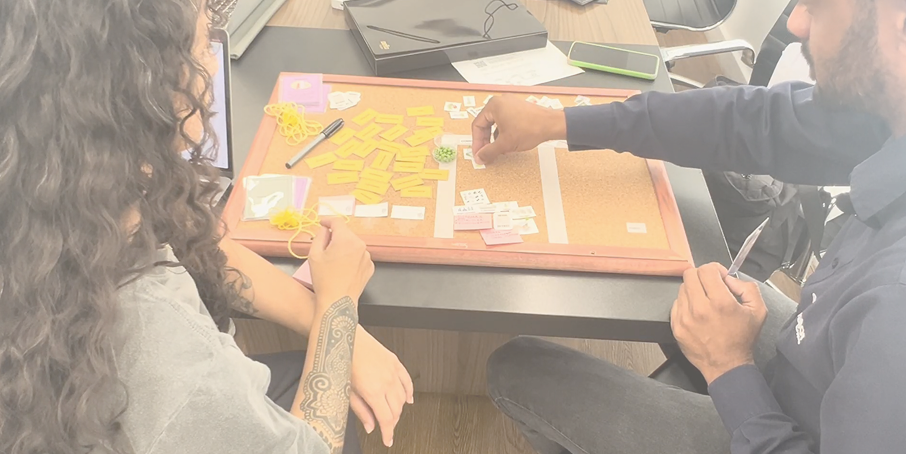
Research and co-creation record
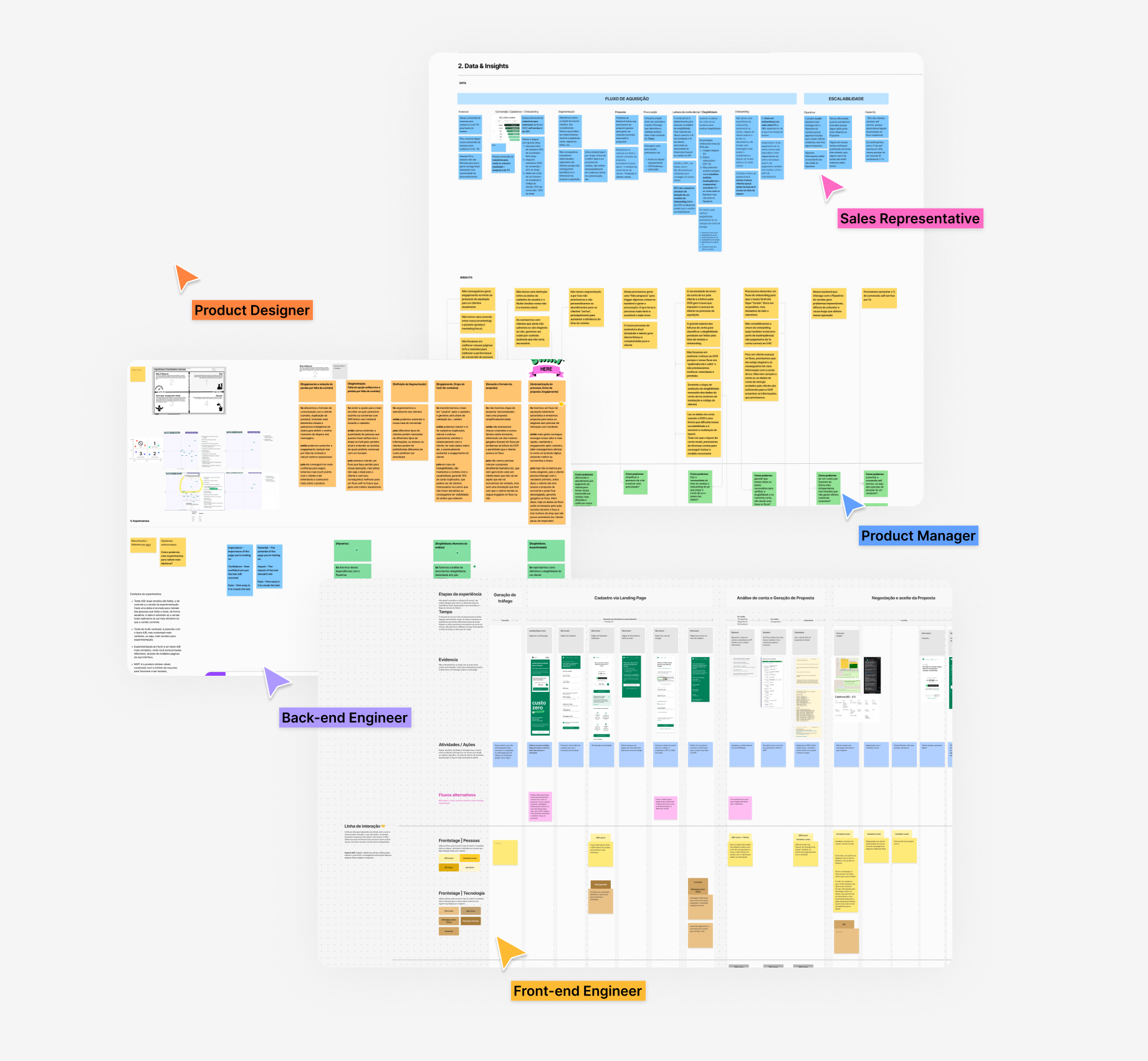
Strategic diagnosis of the acquisition funnel
Running qualitative and quantitative research
Co-creation with users and usability testing
Hypothesis definition and roadmap planning with product and engineering
Redesign of the digital acquisition experience
Continuous data-driven experimentation

How the work unfolded

The work evolved across three phases. Each one started where the previous left off — and revealed a problem the previous phase couldn't see.

Phase 1

Diagnosis: the problem was structural, not visual

We mapped friction points, set up proper data instrumentation, and observed how leads actually moved through the flow.

What we found wasn't a screen problem. It was a process built around human intermediaries. Without a salesperson, customers didn't know what to do next.

Outcome: visibility of key bottlenecks, initial improvements at the top of the funnel, and database/experimentation for the following moments.

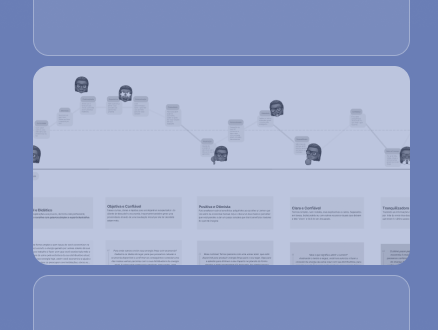
Funnel mapping and initial diagnosis

Phase 2

Transformation: from manual process to digital product

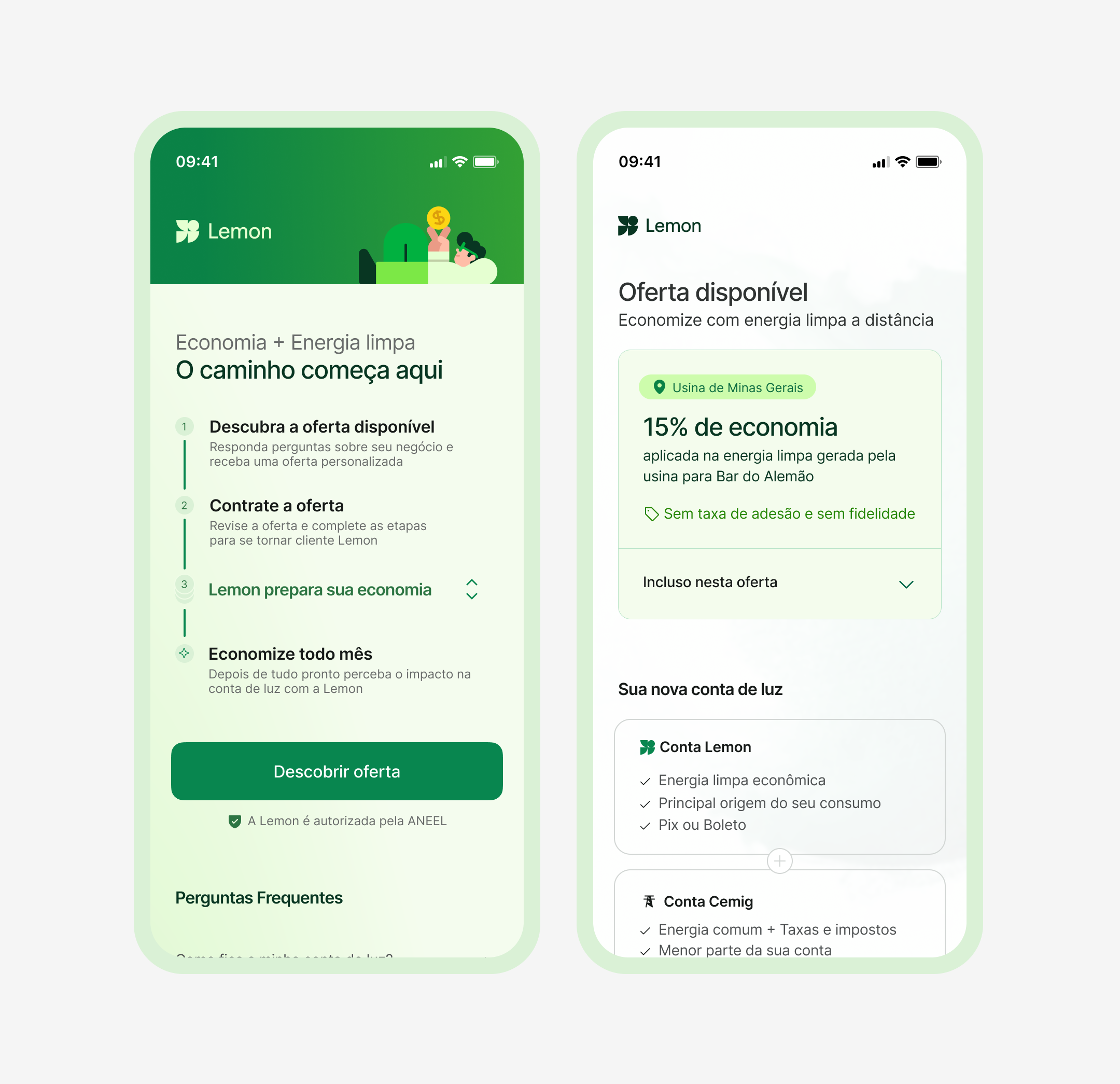
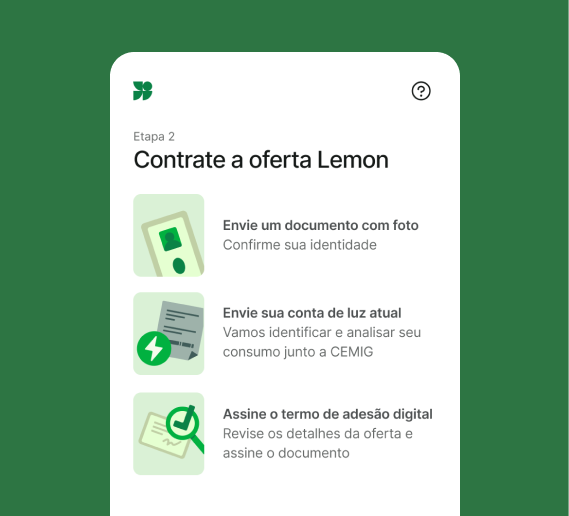
We redesigned the flow around autonomy: reorganizing steps, simplifying decisions, and removing dependencies on the operations team.

We shipped in stages, learning continuously across each cycle.

Phase 2 results: 4x increase in conversion, 83% of hires in self-service, and sales cycle reduced by over 70%.

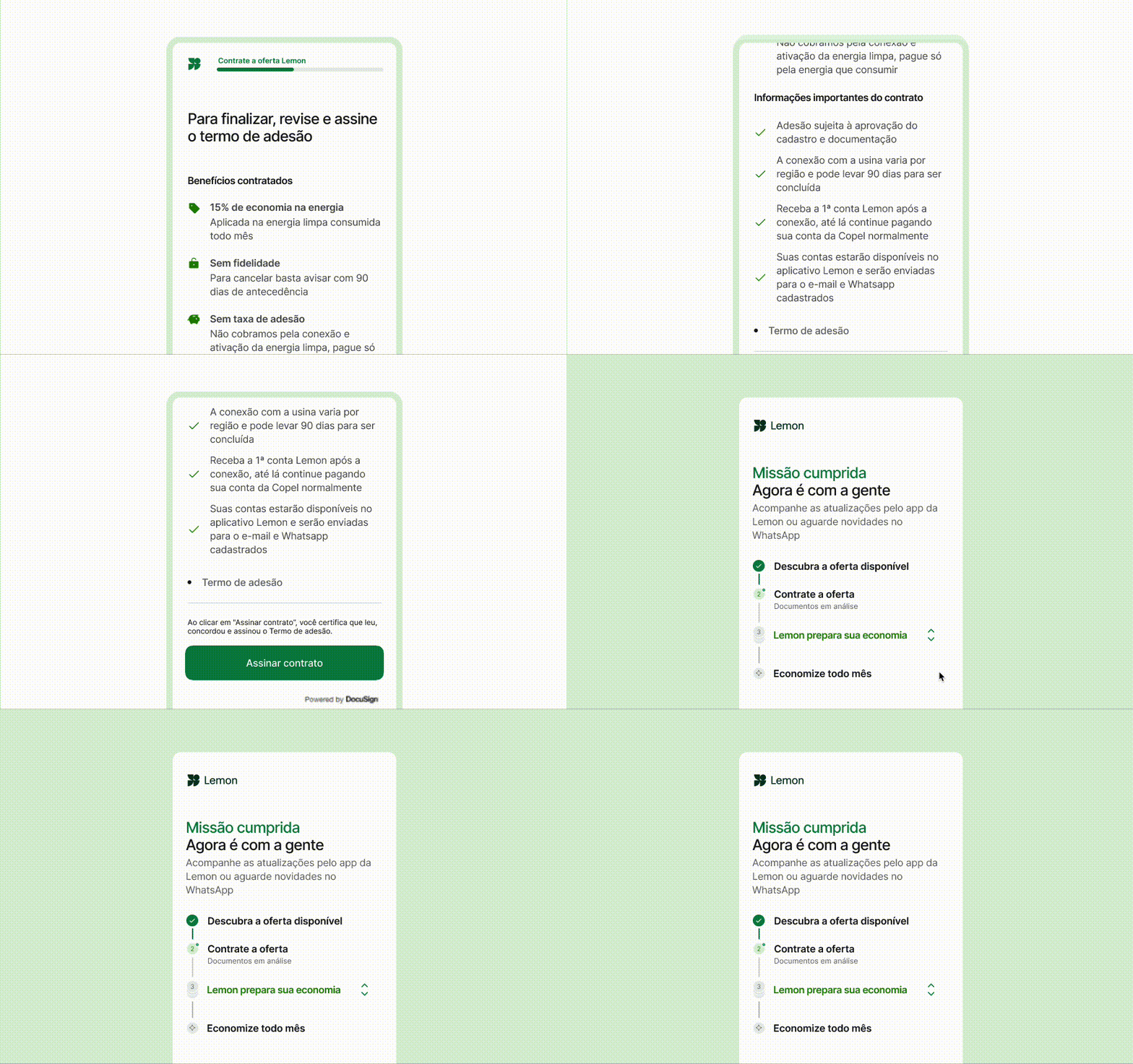
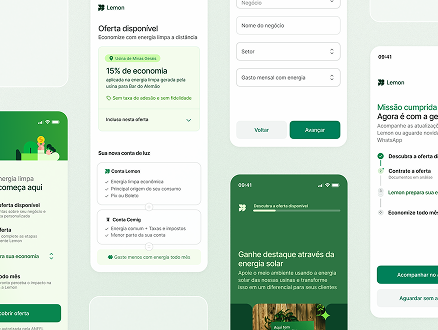
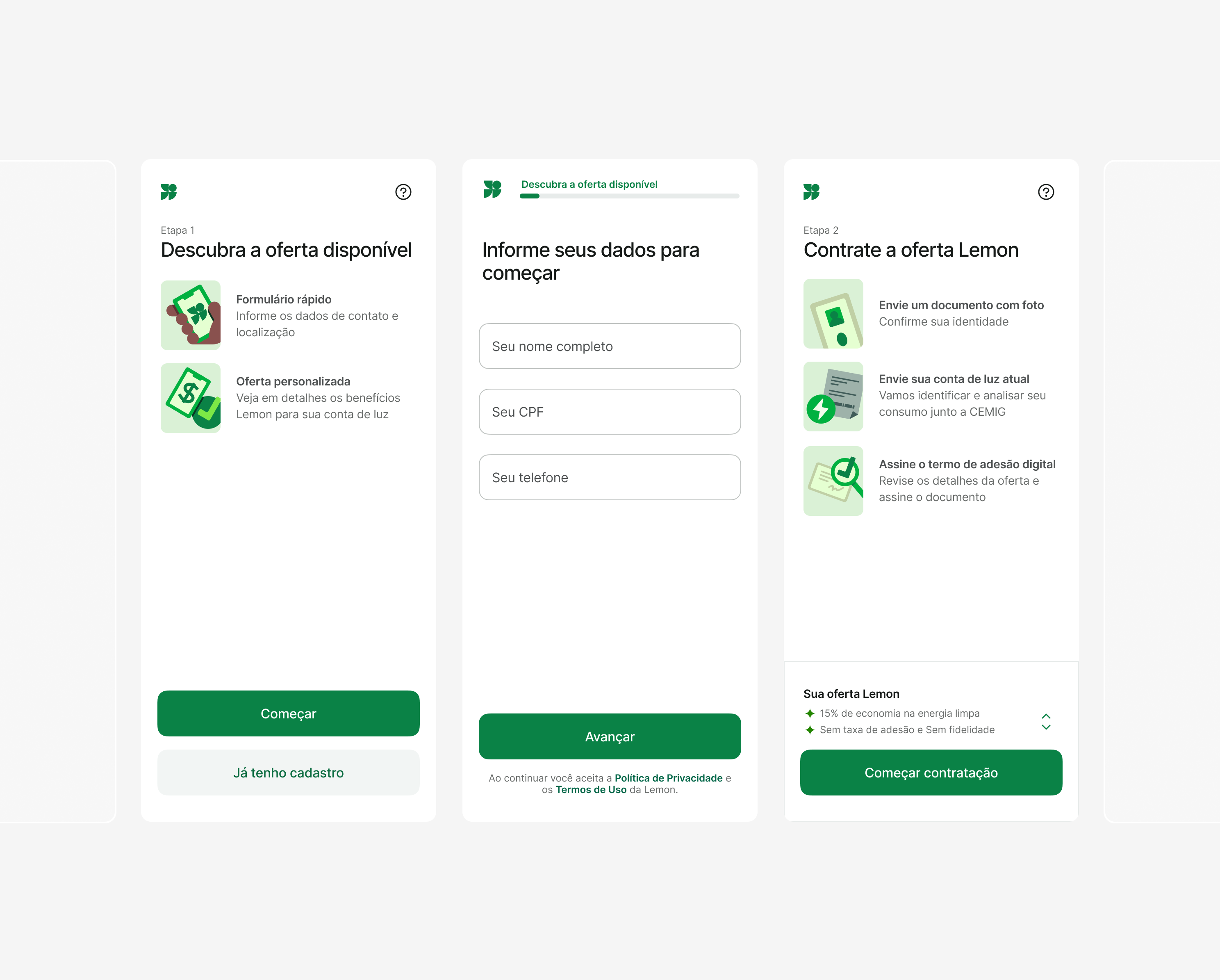
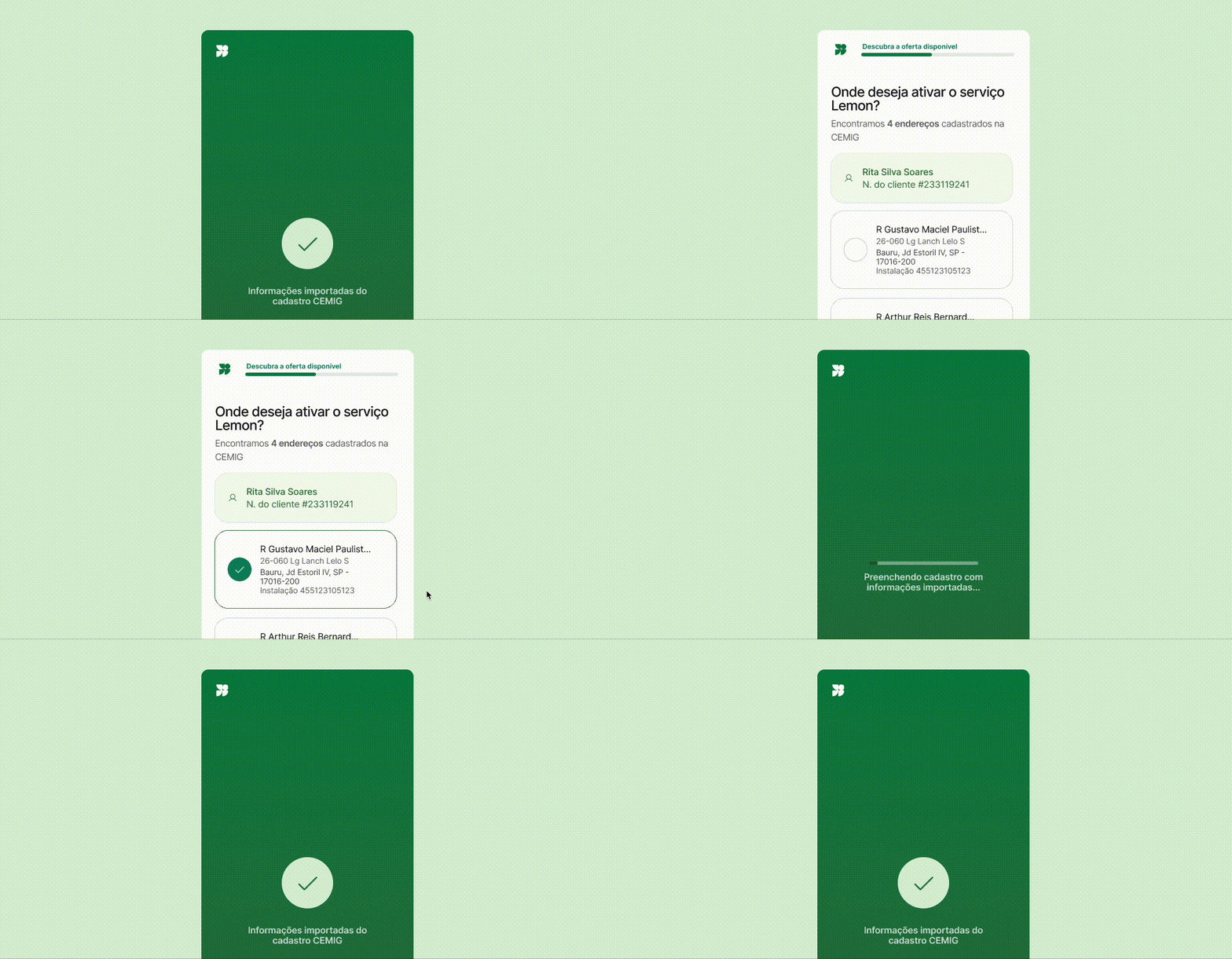
Overview of the redesigned flow

A few of the micro-experiments that got us there:

Experiment 1

Experiment 1

Remove barriers at the start of sign-up

  • Requiring the customer's energy bill upfront was causing drop-off.
  • We tested collecting that information later, after presenting the value of the service.
  • Drop-off in the early steps dropped significantly.
Experiment 2

Experiment 2

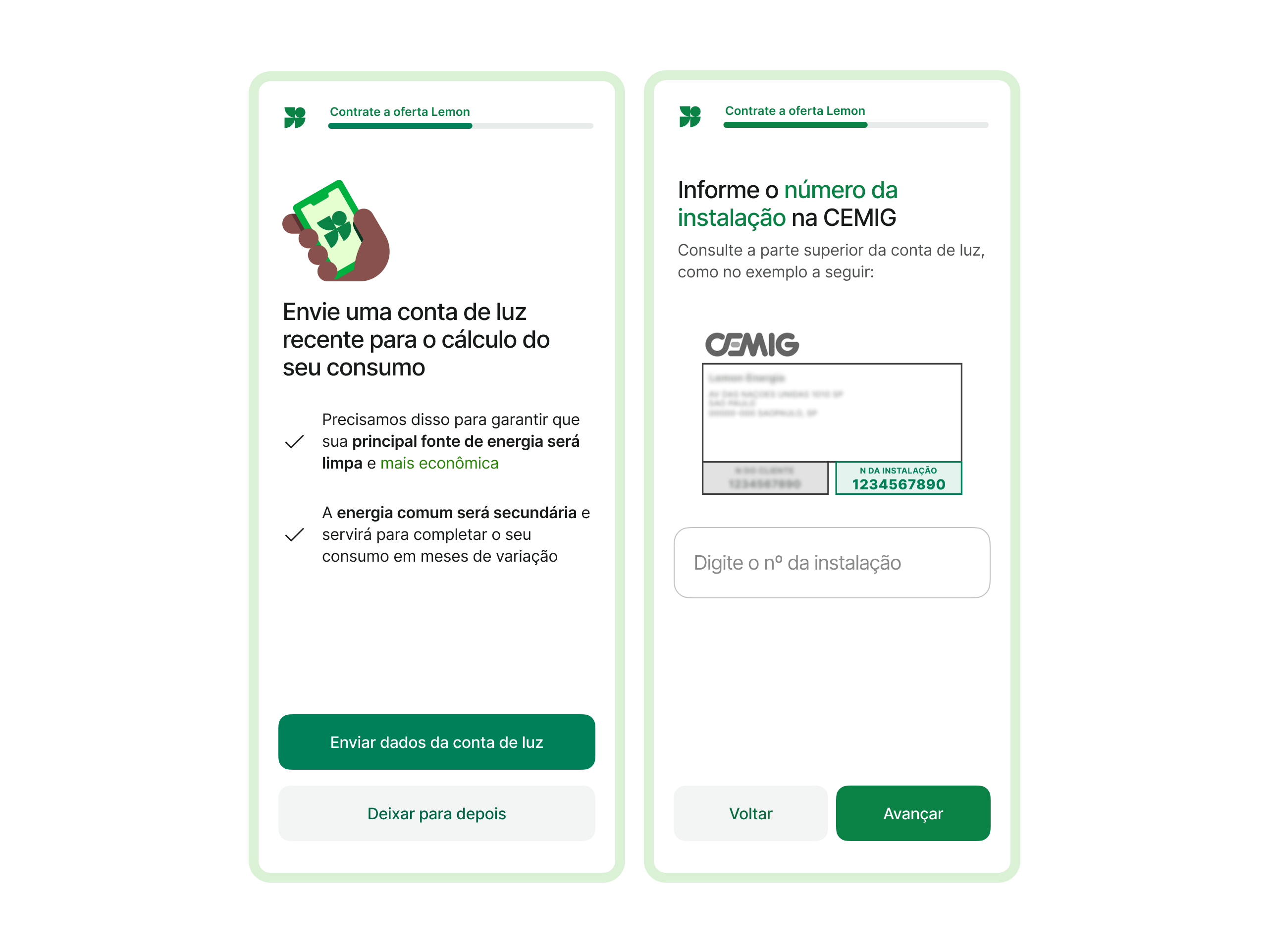
Automate energy bill reading

  • The OCR was failing and requiring human intervention in 96% of cases.
  • We redesigned the bill submission flow and improved processing.
  • The result: less operational dependency and more customer autonomy.
Experiment 3

Experiment 3

Simplify the digital signature

  • The signing step was generating confusion and delays.
  • We simplified and reorganized the steps in the flow.
  • Reducing overall time to contract.

Phase 3

The problem that optimization created

Conversion was up. Self-service was working. And that's when a new problem came into focus.

Layer by layer, the research showed the same tension: we removed frictions to sign the contract, but we didn't build understanding about what came next.

Diagnosis: the flow delivered speed, but did not build understanding, aligned expectations, and a client prepared for the post-contract.

"I signed but didn't really understand what would happen next."
"I thought I would receive the discount soon, I didn't know it would take so long."
"I did everything, but I was left unsure if it worked."
On one side: high conversion, self-service, and speed.
On the other: incomplete understanding and misaligned expectations.

The proposal

Reorient the flow: narrative and segmentation before signing

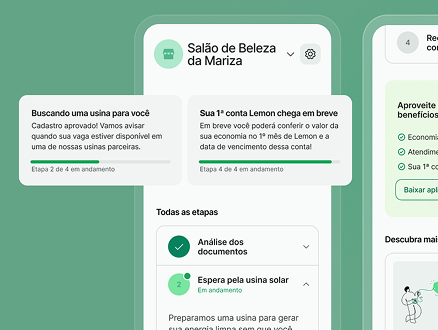
We proposed a reorientation — not more optimization of the same steps, but a rethink of what the flow was actually communicating. Tell a better story before asking for the signature. Segment customers as they arrive. Set expectations before the contract, not after.

This proposal wasn't implemented before I left. But the diagnosis was complete, the artifacts were built, and the direction was clear.

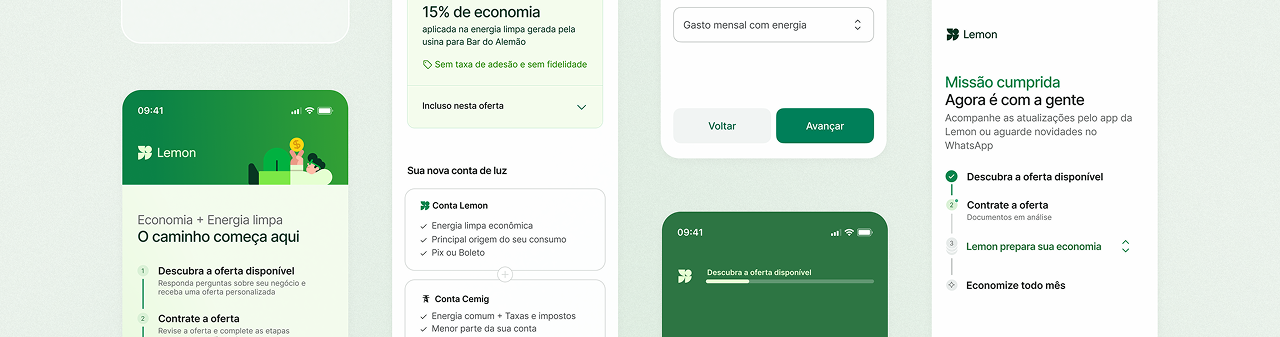
Artifacts of the proposal in development

Results

The acquisition transformation had a direct impact on growth, operational efficiency, and product scale. It also left a lesson beyond the numbers: optimizing without building understanding is only a temporary fix.

4x

increase in conversion

83%

of sign-ups completed in self-service

-70%

reduction in sales cycle length

4x operational capacity

without proportional headcount growth

7x+ customer base growth

sustained at scale

The problem is rarely where it looks like it is.

Optimizing without understanding just moves the problem downstream.
When we remove friction without building understanding, conversion goes up and the problem appears after the contract.
Fast experimentation only works with deep diagnosis.
The micro-experiments that worked came from structural reading built on layers of research.
The funnel doesn't exist in isolation.
It prepares the customer for what comes next — and needs to be designed with that responsibility.
Not every outcome is a shipped feature.
Naming the problem clearly, building diagnosis, and leaving a defined direction is also a strategic result.