Storytelling: When the product couldn't speak for itself

We built Lemon's narrative from first contact through onboarding — and developed our own metric to track whether it was actually working.

Year2022 to 2025
My roleLead of Discovery & Strategic Research
TeamProduct · Marketing · Engineering · Customer Support · Legal
CompanyLemon Energia
IndustryEnergy · Climate tech
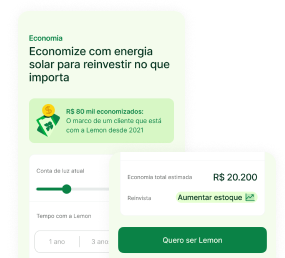
Cover of the strategic research case

When I joined Lemon, the product was still largely unknown in the Brazilian market. The value proposition — access to solar energy with no installation required — was genuinely innovative, but hard to explain.

And the problem wasn't just in the interface.

CSAT scores were high. People said they were satisfied. But in qualitative research, it was clear that many of them didn't really understand what they'd signed up for — or what to expect afterward.

That meant this wasn't a usability problem. It was a narrative problem. And narrative doesn't happen on a single screen: it's built across the entire journey, from the first touchpoint with the brand all the way to the first Lemon bill.

A product that was hard to explain

The concept had no clear reference point for most consumers. People arrived with questions that should have been answered long before.

Metrics that hid the problem

High CSAT didn't reflect actual understanding of the service. We were measuring satisfaction when we needed to be measuring comprehension.

Fragmented research

The insights were generated on an ad hoc basis, with no structure to connect learning over time.

The core design question: How do you build a consistent narrative across an entire journey — and how do you know whether it's working?

Strategic Impact

Solving this problem meant more than tweaking copy or redesigning screens. We needed to understand exactly where comprehension broke down along the journey, build a narrative that held together from awareness through onboarding, and create instruments to measure that continuously.

The impact was twofold: a more intelligible product for people arriving for the first time, and an organization better equipped to learn from its own users.

Narrative as a product

Lemon's communication developed consistent terminology, information hierarchy, and progressive storytelling across the full journey.

A new way to measure perception

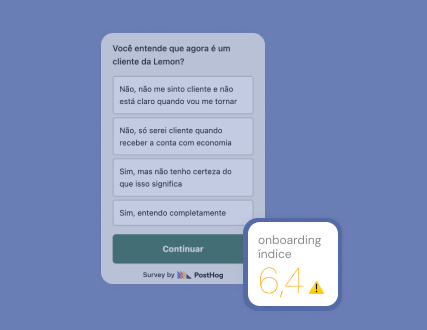
We created the Understanding Index, a proprietary methodology to measure service comprehension at three distinct moments in the journey.

A research culture

Squads began running their own research, turning continuous learning into an organizational practice.

Leadership in discovery and strategic research

I led the discovery and strategic research tracks at Lemon over three years. My work connected product, marketing, and operations — investigating how people perceived the service, where understanding broke down, and what needed to change in both the narrative and the experience for Lemon to make sense to someone encountering it for the first time.

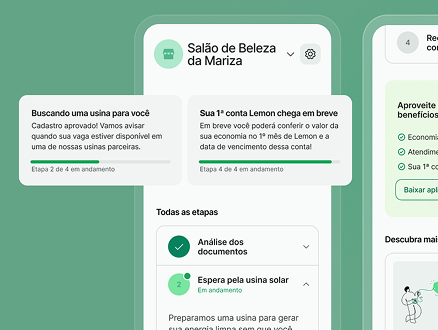
Visual of the research and discovery work
Structuring continuous discovery practices
Running qualitative and quantitative research
Creating perception and comprehension metrics
Integrating product, marketing, and operations
Building a research culture across squads

How the work unfolded

The work evolved across three phases. The first two built the foundation of understanding. The third turned that understanding into a system.

Phase 1

Exploratory research

We investigated how potential customers perceived the service and where the biggest comprehension barriers appeared along the journey.

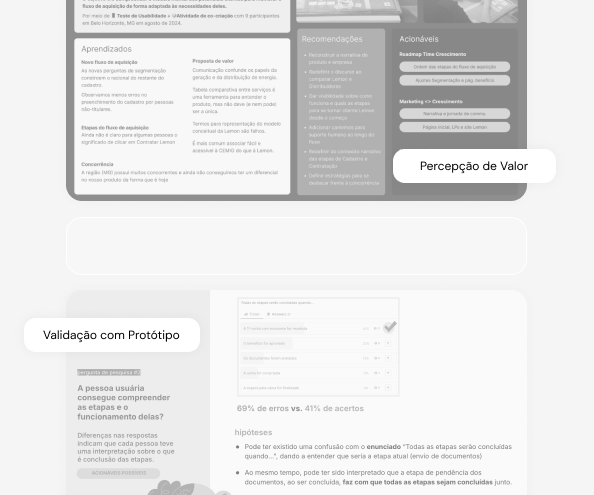
The interviews revealed a pattern: the questions people had weren't random. They surfaced at the same moments, around the same aspects of the service. That gave us the first clear signals of where the narrative needed reinforcing.

Impact: first adjustments in communication and the acquisition experience, guided by real behavior — not by assumption.


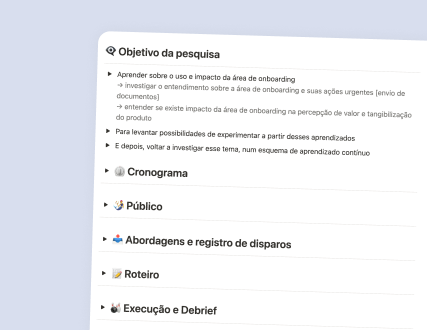
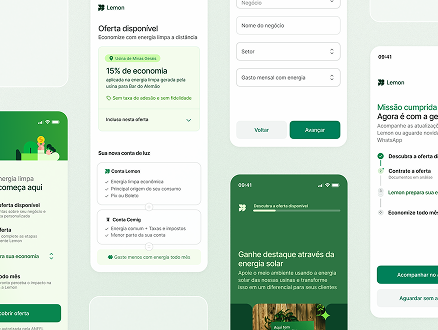
Material from phase 1 of the project

Phase 2

Continuous discovery

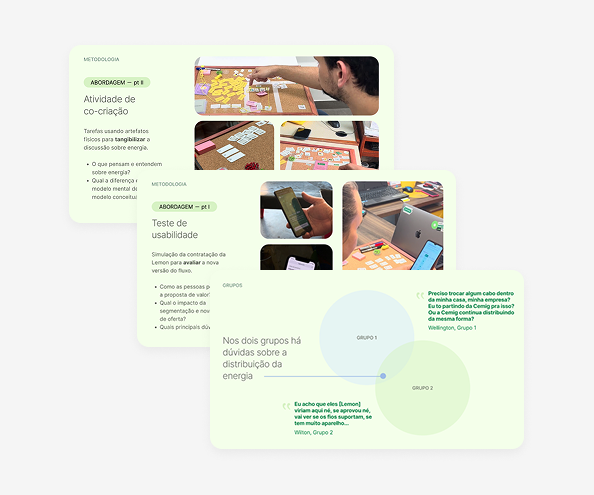
We structured regular discovery cycles with both in-person and remote usability testing. Research stopped being a one-off activity and started tracking alongside the product as it evolved.

This let us validate improvements to the acquisition flow in real time, and generate hypotheses based on observed behavior — not intuition.

Impact: the product began to evolve iteratively based on real learning. Research ceased to be an occasional input and became part of the process.

Continuous Discovery in practice

From research to system

Based on what we'd learned, it became clear that optimizing isolated touchpoints wasn't enough. Understanding needed to be built consistently across the full journey — and we needed a reliable way to know whether it was happening.

This phase had three main tracks:

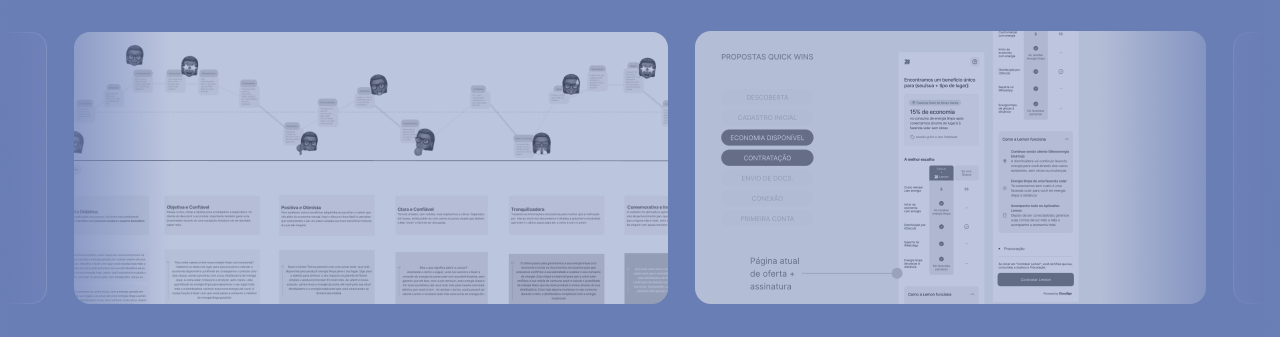
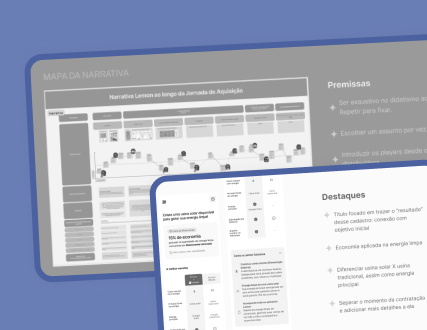
Journey narrative design

Track 1 — Journey narrative

  • In partnership with communications, we mapped the entire journey — from the first contact with the brand to the first Lemon account — and built a consistent narrative throughout.
  • We defined information hierarchy, consistency of terminology, and progressive storytelling: what the person needs to understand at each stage to trust enough to move forward.
  • Deliverables: visual map of the narrative, glossary of consistent terms, proposals for quick wins, and structural initiatives.
Redefinition of perception metrics

Track 2 — Understanding Index

  • We identified that CSAT did not reflect what we needed to measure. A person can be satisfied and still not understand what they contracted.
  • We created three surveys distributed at specific moments in the journey — awareness, contracting, and onboarding — and developed the Understanding Index to measure comprehension at these three moments.
  • This gave us, for the first time, a longitudinal reading of how understanding evolved — and where it still broke.

Track 3 — Research culture

  • To ensure that learning did not depend on just one person, we structured ways to distribute the capacity to research within the organization.
  • We created templates, playbooks, and training for squads to conduct quick micro-research — Guerrilla Research.
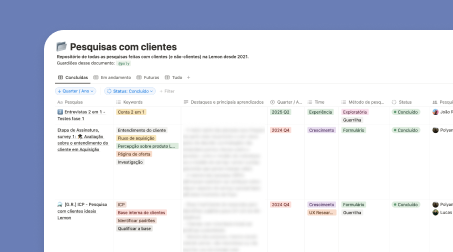
  • We also organized a centralized repository with all the research conducted over the years.
  • Impact: 5 squads began conducting autonomous research. The accumulated learning became collective heritage.

Results

Consistent narrative

Information hierarchy, terminology, and storytelling aligned across the full journey, from first contact through onboarding.

Understanding Index

A new methodology replacing CSAT as the primary indicator of product perception, measuring comprehension at three moments in the journey.

Research culture

5 squads running autonomous research through the Guerrilha Research program.
Visual highlight of continuous research
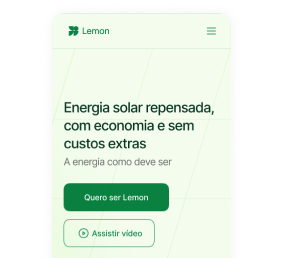
Visual highlight of consistent narrative

Foundation for strategic decisions

Discovery began continuously informing improvements to the journey, the value proposition, and communications.

Innovative products require educational journeys.

Explaining the value can matter just as much as delivering the solution.
Especially when the service has no clear reference in the market.
Metrics shape what you're able to see.
Measuring satisfaction hides understanding issues. Creating the right instrument was as important as conducting the research.
Narrative is also a product.
The way the service is explained directly influences trust and adoption — and needs to be treated with the same rigor as interface and flow.
Distributing the ability to learn matters as much as generating insights.
An organization that researches on its own learns faster than one that relies on a department to do it for them.